Kling 3.0 vs Seedance 2.0: Which AI Video Generator Is Better?
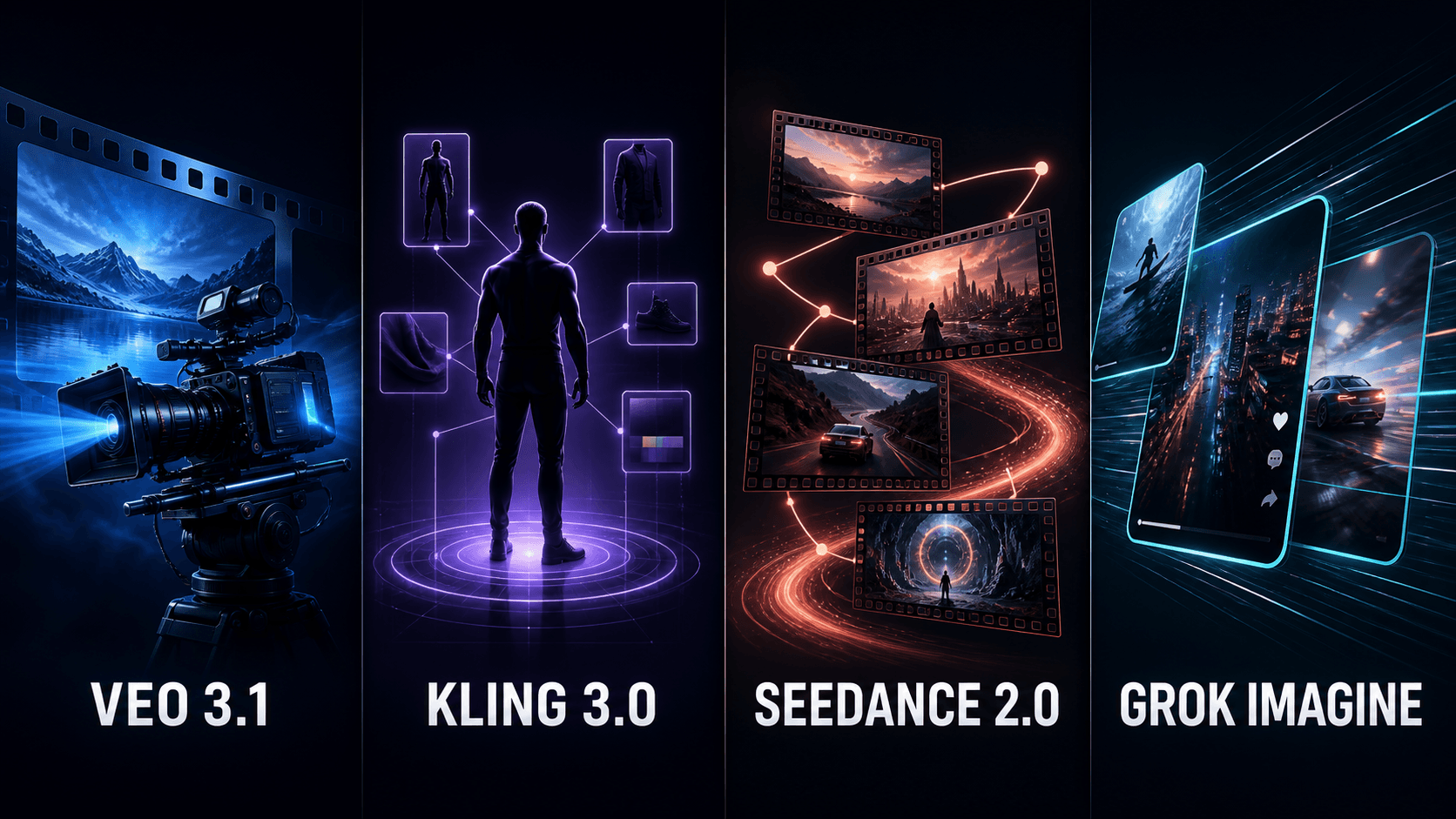
Kling 3.0 and Seedance 2.0 both accept multimodal inputs and target video with audio, but they do not serve exactly the same workflow. Kling emphasizes control and consistency in an all-in-one environment, while Seedance stands out for multi-shot storytelling and complex motion. Here is how to choose for actual production work.
The short answer
Choose Kling 3.0 when you need character or product control from multiple references, combined generation and editing, or consistency across iterations. Choose Seedance 2.0 when a prompt needs connected shots, large action, narrative progression, and audio-video output in one pass.
Do not decide from demos alone. Run the same prompt, aspect ratio, approximate duration, and references in both models, then calculate the percentage of output you can actually use.
What Kling 3.0 offers
Kuaishou introduced the Kling 3.0 family with Video 3.0, Video 3.0 Omni, Image 3.0, and Image 3.0 Omni. It supports text, image, audio, and video while bringing content understanding, generation, and editing into one workflow.
Kling emphasizes narrative control and consistency. That makes it relevant to product advertising, recurring characters, controlled storyboards, and projects that need refinement after the first generation.
What Seedance 2.0 offers
ByteDance describes Seedance 2.0 as a unified multimodal audio-video architecture accepting text, image, audio, and video. It targets high-quality multi-shot output up to 15 seconds with dual-channel audio.
Seedance fits short trailers, narrative ads, action, transitions, and video-to-video work. Access may vary by country and platform, so verify the official service before purchasing credits.
Motion and multi-shot comparison
Seedance has an explicit multi-shot advantage: a prompt can describe progression across several viewpoints in one output. More changes can still increase character, object, or environment drift.
Kling is a strong fit when a shot needs controlled movement from references. In both models, limit the number of primary actions and describe camera behavior in chronological order.
Character and product consistency
For recurring characters, use clean references, visible clothing, and one locked identity description. Avoid changing face, wardrobe, lighting, and camera angle at the same time between shots.
Product video needs a separate test for logo, typography, shape, and brand color. A model that creates attractive people may still fail to preserve packaging.
Audio and dialogue
Both target audio-video workflows, but dialogue still needs checks for pronunciation, lip sync, voice consistency, and ambience. When a brand voice must remain exact, generating visuals first and adding controlled voice production can be safer.
Score audio separately from visuals. A beautiful clip is not useful when dialogue is wrong and cannot be repaired efficiently.
A practical benchmark
Test five briefs: a walking subject with tracking camera, a product close-up containing text, a hand action, a three-shot story, and a dialogue scene. Use matching inputs and output goals in Kling and Seedance.
Record prompt adherence, anatomy, motion, consistency, audio, turnaround time, price, and retries. The better model has the lower cost per approved clip, not necessarily the lower generation price.
Should you choose Kling or Seedance?
Kling 3.0 is a sensible starting point for product ads, referenced characters, and workflows that require more control. Seedance 2.0 is compelling for short films, multi-shot storytelling, large motion, and multimodal experimentation.
For an important campaign, test both during concept development and lock the model after gathering evidence. Features and pricing change quickly, so confirm the official interface at production time.
Related articles
Frequently asked questions
Is Kling 3.0 or Seedance 2.0 better?
Kling is a stronger fit for reference control and consistency, while Seedance stands out for multi-shot output and complex motion.
How long are Seedance 2.0 videos?
ByteDance reports multi-shot output up to 15 seconds; actual availability depends on the platform and access mode.
Does Kling 3.0 generate audio?
The Kling 3.0 family supports multimodal input and output including audio, but exact capabilities depend on the selected model and mode.
Which model is better for product video?
Start with Kling when references and consistency matter, but benchmark logos, text, and product shape with the same brief in both models.
Ready to streamline your Google Flow workflow?
Install the VeoBulk Extension to manage prompts, queues, and results directly in Chrome.